


Warehouse Inventory  
Management Consultants

Minimising inventory

Inventory is the sum of all your products stored and can include finished products, raw materials, work in progress, returns, promotional materials, etc. depending on your business, but it is built up by decisions made at individual product level by the person responsible for the product.

This person might be a factory or warehouse manager, but it is more frequently the buyer or merchandiser for the product or product group.

Your starting point for minimising inventory is to identify the drivers behind the quantity you have to stock. These could include long lead times, minimum batches or order quantities, popularity, promotional activity, seasonality etc.

helping you to optimise your inventory and storage

At LPC we frequently find with our customers that the responsibility is fragmented across a number of people and that the amount and value of inventory increases over time and that an inventory review will result in the identification of opportunities to reduce the stockholding.

In some instances there is the need to restrict stockholding on a particular site due to space constraints or to centralise or decentralise. Whatever the challenge LPC can help you to optimise your inventory and storage.

inventory Management

Inventory management is an ongoing process vital to the health and efficiency of your storage operation. No business is entirely static and products have lifecycles with their profile changing over time. A product might be initially be a fast mover when newly introduced with sales falling over time as newer products are introduced, or it might be seasonal, or have other characteristics. Inventory management should take account of these changes and proactively make changes such as location changing as popularity changes, or reducing ordering towards the end of the season to avoid being left with last season’s stock.

The focus of inventory management is rightly on the saleable stock, but some of the other areas can have a significant impact on a warehouse operation and should not be forgotten. These include packaging, consumables and non-sales items used in the operation, point of sale, marketing and promotional materials, records, aged or damaged stock, returns from customers and returns going to suppliers.

At LPC we take a holistic approach to inventory that considers everything held and its requirements and impact. Inventory is a key component of your operation and can’t be considered in isolation.

DESIGNING-FOR-EFFICIENCY-HOW-PEER-REVIEW-TRANSFORMS-WAREHOUSE-PERFORMANCE

Product Grouping And Segmentation

A product in storage needs a location. The location could be chosen at random, but it is much better for your operation to have a location strategy and rules to determine the location of each product to drive up your productivity and optimise your storage footprint and improve space efficiency. The strategy and rules you need will be based on product grouping and segmentation.

Product Grouping


Considering product groups; if you can identify some products that can be grouped together based on size and properties or commonalities and compatibilities you have the opportunity to design your racking and shelving to suit the physical characteristics of a particular group and minimise wasted space, improve the presentation to the picker to make it easier for them to access the product.

Products that are ordered together can be co-located to minimise walking time and improve productivity.

Segmentation


Segmenting your products can also be undertaken by popularity with the range split into fast, medium and slow movers. The faster movers could then be located nearer to your packing or despatch areas with medium and slower movers further away. This will reduce your overall travel distances, increase the proportion of your pickers time spent on picking and improve your productivity.

LPC have considerable experience in reviewing inventory, product categories and segmentation to identify the optimal location strategy to drive your operation forward and improve your efficiency.

Space Utilisation And Product Management

JIT Deliveries Push Stock Back Up The Supply Chain

Our Other Specialist Services:

Book Your Free Consultation with David

Book an initial, no-obligation meeting with one of our consultants and benefit from over 40 years of experience

Case Studies

Explore some of our most successful logistics and warehousing projects.

View All Case Studies

Industry Insights

WHO SHOULD DESIGN YOUR WAREHOUSE RACKING LAYOUT — A SUPPLIER OR A LOGISTICS CONSULTANT?
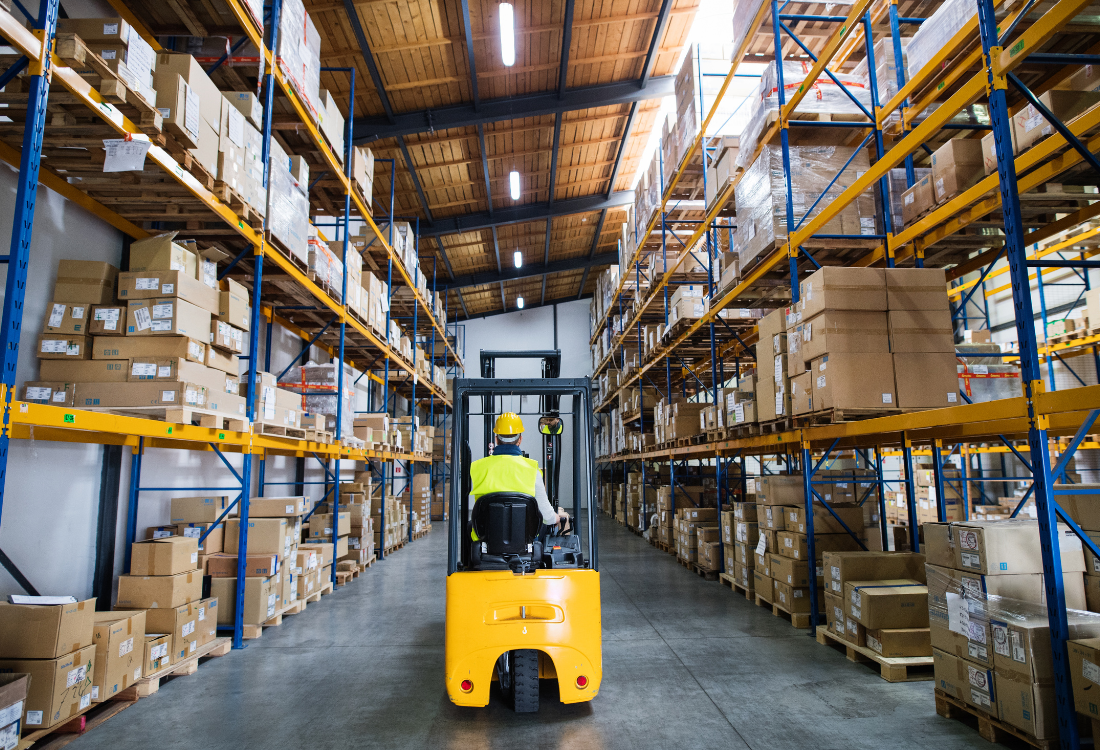
A warehouse worker operating a yellow forklift between tall racking aisles filled with boxes and pallets, representing efficient warehouse layout design and the balance between supplier and logistics consultant expertise.

WHO SHOULD DESIGN YOUR WAREHOUSE RACKING LAYOUT — A SUPPLIER OR A LOGISTICS CONSULTANT?

26-Nov-2025 09:30:00 1 min read
DESIGNING FOR EFFICIENCY: HOW PEER REVIEW TRANSFORMS WAREHOUSE PERFORMANCE

An aerial view of a modern warehouse with forklifts and organised storage aisles, illustrating efficient warehouse layout, material flow, and design optimisation achieved through peer review.

DESIGNING FOR EFFICIENCY: HOW PEER REVIEW TRANSFORMS WAREHOUSE PERFORMANCE

19-Nov-2025 09:30:00 2 min read
BUILDING RESILIENCE THROUGH STOCKHOLDING AND PROCESS OPTIMISATION

A warehouse manager analysing supply chain data and performance charts on a computer screen inside a storage facility, illustrating inventory planning, stockholding strategy, and process optimisation for improved resilience.

BUILDING RESILIENCE THROUGH STOCKHOLDING AND PROCESS OPTIMISATION

12-Nov-2025 09:30:00 2 min read

Book a Free Logistics Health Check

Your chance to get the benefit of 40 years of experience in offering practical solutions to warehousing & logistics problems, at no cost.